Thursday, December 25, 2025

Fact Guardian | Inside US Politics & World Affairs
Fact Guardian | Inside US Politics & World Affairs
The Trump administration's attempt to reallocate federal Homeland Security funds away from states that refuse to assist with specific federal immigration enforcement measures has been thwarted by a federal judge.
The group of 12 attorneys general who sued the government earlier this year after learning that their states would get much less federal subsidies because of their "sanctuary" areas won a victory Monday according to U.S. District Judge Mary McElroy's decision.
Over $233 million was cut from Connecticut, Delaware, the District of Columbia, Massachusetts, Minnesota, New York, Rhode Island, Vermont, and Washington by the Federal Emergency Management Agency and the U.S. Department of Homeland Security. The funds are part of a $1 billion scheme in which states are expected to transfer the majority of the funds to police and fire agencies based on risk assessments.
Shortly after a different federal judge in a different legal challenge declared that the federal government's requirement that states collaborate on immigration enforcement proceedings in order to receive FEMA disaster funds was illegal, the cuts were announced.
The federal government was considering states' stance on federal immigration enforcement while deciding whether to cut federal funds for the Homeland Security Grant Program and other programs, according to McElroy's 48-page judgment.
"What else might be considered arbitrary and capricious than the defendants' decisions to slice off the millions-place digits of granted monies and to limit funding to specified counterterrorism programming by prominent round numbered amounts? To conclude that no tenable, logical formula could provide this outcome, one does not need a degree in mathematics or law, McElroy stated.
After that, the judge nominated by Trump directed the DOHS to return the previously declared funding allotments to the plaintiff states.
"Given that defendants have been entrusted with a most solemn duty: safeguarding our nation and its citizens, their wanton abuse of their role in federal grant administration is particularly troubling," McElroy said. "The funding at issue here supports essential counterterrorism and law enforcement programs, even though the complexities of administrative law and the terms and conditions on federal grants may seem abstract to some."
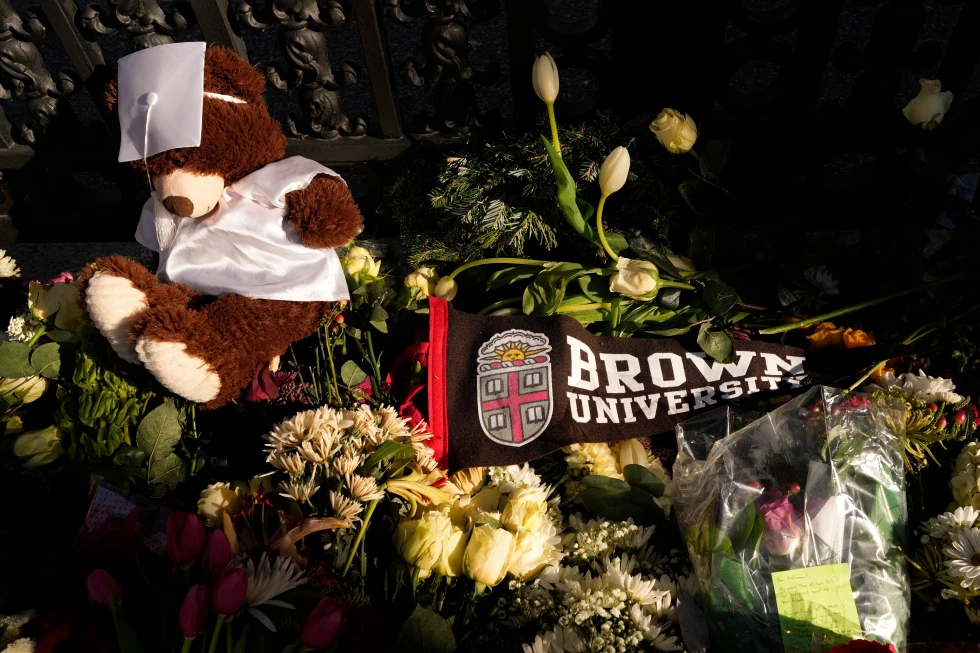
Notably, McElroy pointed to the recent shooting at Brown University, in which a shooter murdered two students and wounded nine more, as an instance in which the $1 billion federal program would be essential to dealing with such a catastrophe.
Little more than a week after the Brown massacre, the judge from Rhode Island noted in her decision that it was "unconscionable and, at least here, unlawful to hold hostage funding for programs like these based solely on what appear to be defendants’ political whims."
In a statement, DHS Secretary Tricia McLaughlin stated that the agency intends to challenge the directive.
McLaughlin declared, "This judicial sabotage weakens the entire nation and threatens the safety of our states, counties, and towns." "We'll fight to save American lives and get these important changes back.
Attorneys general who sued the government, meanwhile, praised the ruling.
In a statement, Massachusetts Attorney General Andrea Joy Campbell said, "This victory ensures that the Trump Administration cannot punish states that refuse to help carry out its cruel immigration agenda, particularly by denying them lifesaving funding that helps prepare for and respond to disasters and emergencies."










.webp)