Saturday, May 30, 2026

Fact Guardian | Inside US Politics & World Affairs
Fact Guardian | Inside US Politics & World Affairs
In a major setback for the president's attempts to send troops to American cities, the Supreme Court on Tuesday rejected the Trump administration's request to station National Guard troops in the Chicago region to help its immigration crackdown.
The Republican administration sought an immediate overturn of a decision by U.S. District Judge April Perry that had prevented the deployment of troops, but the justices denied their request. Additionally, an appeals court had declined to intervene. It took the Supreme Court over two months to take action.
Three justices publicly dissented: Neil Gorsuch, Clarence Thomas, and Samuel Alito.
Although it is not a final decision, the high court order may have an impact on other lawsuits contesting President Donald Trump's efforts to send troops to other cities with Democratic mayors.
The majority of the high court stated, "At this preliminary stage, the Government has failed to identify a source of authority that would allow the military to execute the laws in Illinois."
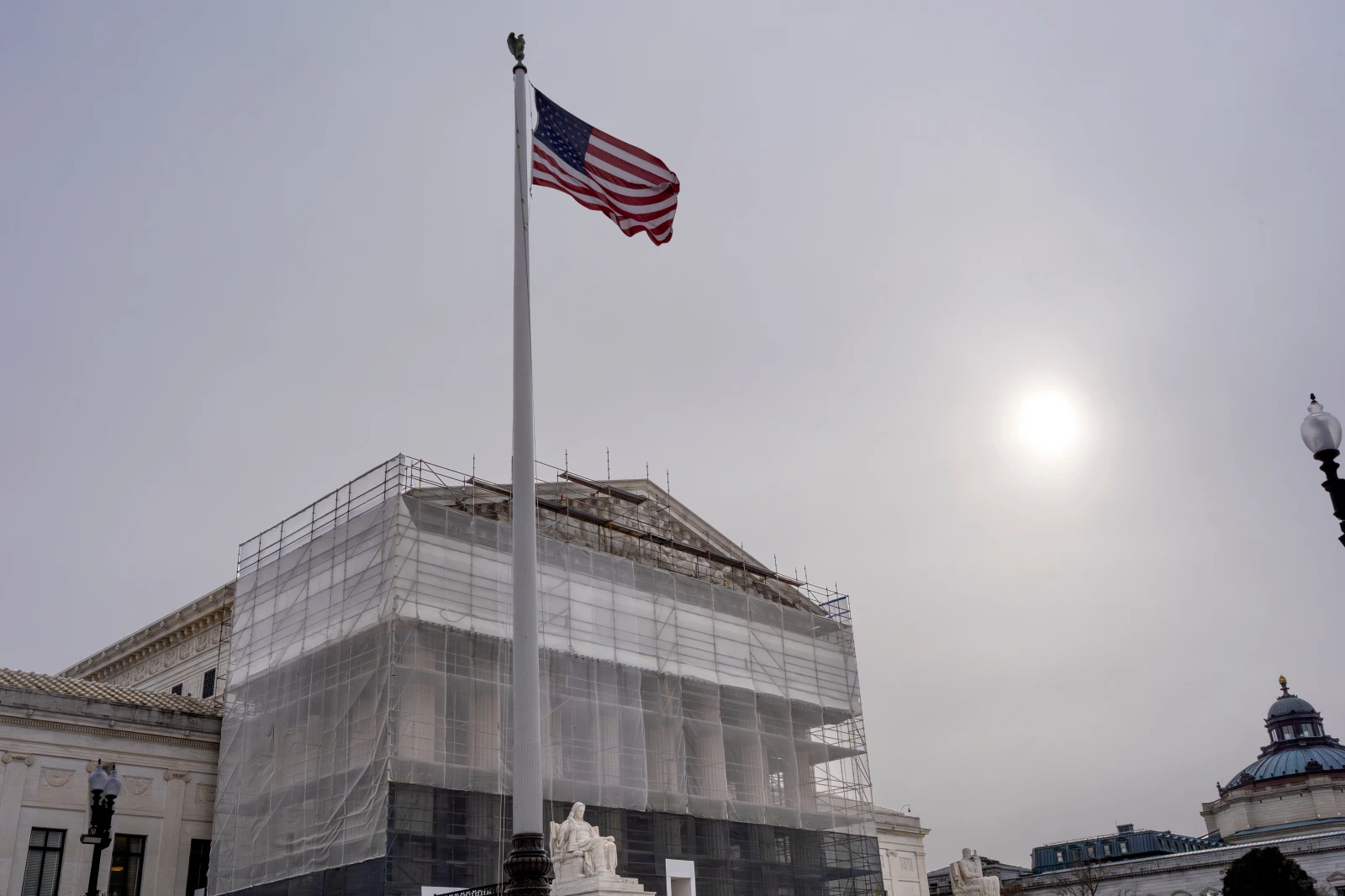
Although he supported the decision to prevent the Chicago deployment, Justice Brett Kavanaugh stated that he would have given the president more discretion to deploy troops in potential future situations.
Trump, who had won numerous emergency appeals since retaking office in January, suffered a rare Supreme Court setback as a result. Trump has been able to prohibit transgender individuals from serving in the military, reclaim billions of dollars in federal expenditures authorized by Congress, take harsh action against immigrants, and remove Senate-confirmed heads of independent federal agencies thanks to the conservative-dominated court.
JB Pritzker, the Democratic governor of Illinois, hailed Tuesday's ruling as a victory for the nation and state.
He declared, "American cities, suburbs, and communities should not have to deal with masked federal agents requesting their documents, making snap judgments based on appearance or sound, and living in constant fear that the President may send the military to their streets."
Conversely, White House spokesperson Abigail Jackson said that the president had called in the National Guard to defend federal assets and employees against "violent rioters."
"That fundamental goal is not diminished in any way by today's decision. The Administration will keep up its daily efforts to protect the American people," she declared.
In their dissent, Alito and Thomas claimed that the court lacked the authority to dismiss Trump's argument that the government need the military in order to enforce immigration laws. Gorsuch claimed that based on the statements made by federal law enforcement authorities, he would have narrowly supported the government.
The Texas contingent of roughly 200 National Guard soldiers was ultimately ordered home from Chicago, although the administration had originally requested permission to send troops from Illinois and Texas.
According to the Trump administration, the troops are required "to protect federal personnel and property from violent resistance against the enforcement of federal immigration laws."
However, Perry stated that she could not find any solid proof that a "danger of rebellion" is developing in Illinois and that there was no reason to think that the protests there have impeded Trump's immigration crackdown.
For two weeks at first, Perry had prevented the deployment. However, she prolonged the injunction indefinitely in October while the matter was being examined by the Supreme Court.
Federal agents have previously used tear gas and other chemical agents on protesters and journalists at the U.S. Immigration and Customs Enforcement facility in the west Chicago suburb of Broadview, where tense protests have taken place.
Authorities reported that four cops were hurt and that 21 demonstrators were arrested outside the Broadview facility last month. The arrests were made by local authorities.
There are numerous legal disputes about National Guard deployments, including the Illinois case.
Attorney General Brian Schwalb of the District of Columbia is fighting to stop the deployment of over 2,000 guardsmen in the nation's capital. In that instance, 45 states have filed in federal court, 22 of which support the attorney general's complaint and 23 of which back the administration's actions.
The crime emergency Trump declared in August ended a month later, but more than 2,200 troops from numerous Republican-led states are still in Washington.
According to an official, all 200 troops from California were being brought home from Oregon after a federal judge in Oregon permanently blocked the National Guard's deployment there.
In an attempt to halt the continued Guard deployment in Memphis, which Trump has compared to his crackdown on Washington, D.C., a Tennessee state court decided in favor of Democratic leaders.
In September, a California judge declared that deployment in the Los Angeles region was unlawful. Only 300 of the thousands of men who had been dispatched there were still present at that time, and the judge did not give them an order to depart.
The California and Oregon decisions have been appealed by the Trump administration to the 9th U.S. Circuit Court of Appeals.
Paul L. Mayer covers the intersection of politics, and financial policy, with a focus on how global and regional developments shape markets and everyday life.