Tuesday, February 24, 2026

Fact Guardian | Inside US Politics & World Affairs
Fact Guardian | Inside US Politics & World Affairs
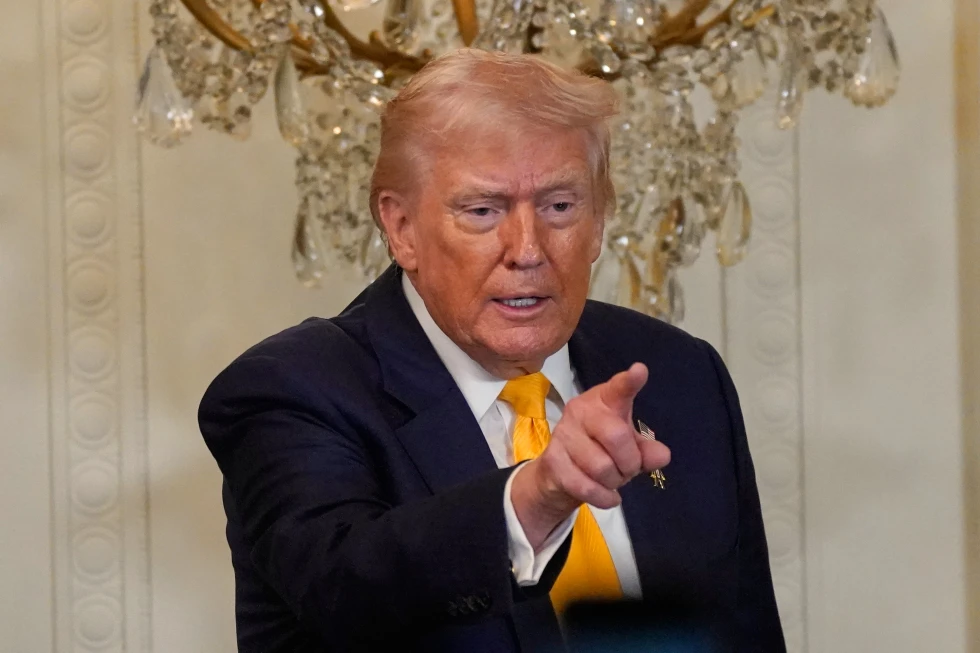
President Donald Trump gestures during a Black History Month event in the East Room of the White House, Wednesday, Feb. 18, 2026, in Washington.
WASHINGTON — A new study from one of America's biggest banks shows that tariffs paid by midsized U.S. businesses increased over the course of last year. This is additional proof that President Donald Trump's campaign to raise taxes on imports is hurting the economy.
Companies that employ a total of 48 million people in the U.S. have had to find ways to deal with the extra taxes. These are the kinds of businesses that Trump promised to revive. They have done this by raising prices for customers, hiring fewer workers, or accepting lower profits.
Chi Mac, the business research director at the JPMorganChase Institute, which published the findings on Thursday, said, "That's a big change in their cost of doing business." "We also see some signs that they may be moving away from doing business with China and maybe toward other parts of Asia."
The study doesn't explain how the extra expenses are affecting the economy, but it does state that U.S. companies are paying tariffs. It's part of a rising number of economic studies that go against what the government says about foreigners paying the levies.
The JPMorganChase Institute analysis analyzed payment data to look at enterprises that do not have the pricing muscle of big multinational companies to make up for tariffs, but are small enough to easily restructure their supply chains to avoid the tax increases. The businesses were in the "middle market" range, which means they made between $10 million and $1 billion and had fewer than 500 employees.
The study shows that the Trump administration's goal of relying less on Chinese manufacturers has been happening. These companies' payments to China were 20% lower than they were in October 2024. It's not clear if this means that China is just sending its goods through other nations or if the supply chains have relocated.
In an interview, the people who wrote the report stressed that businesses are still getting used to the tariffs and said they would keep looking into the matter.
The Trump administration has been very clear that the tariffs are good for the economy, businesses, and workers. Kevin Hassett, who runs the White House National Economic Council, became angry on Wednesday when he saw statistics from the New York Federal Reserve that said about 90% of the cost of Trump's tariffs fell on U.S. businesses and consumers.
Hassett told CNBC, "The paper is an embarrassment." "I believe this is the worst paper I've ever seen in the history of the Federal Reserve system." People who are connected to this paper should probably be punished.
Researchers at the New York Fed said that Trump raised the average tariff rate from 2.6% last year to 13%. He said that tariffs on some things, like steel, kitchen cabinets, and bathroom vanities, were in the country's national security interest. Last April, at an event he called "Liberation Day," he declared an economic emergency to get around Congress and put a baseline tax on goods from most of the world.
The high rates caused a panic in the financial markets, so Trump lowered his rates and then talked to several countries, which resulted in a new set of trade rules. Soon, the Supreme Court will decide if Trump went too far by declaring an economic emergency.
Voters chose Trump in 2024 because he promised to control inflation, but his tariffs have made people angry about how expensive things are. Inflation hasn't gone up much during Trump's time in office so far, but hiring has slowed down a lot, and a group of academic economists thinks that consumer prices were about 0.8 percentage points higher than they would have been otherwise.

Paul L. Mayer covers the intersection of politics, and financial policy, with a focus on how global and regional developments shape markets and everyday life.