Tuesday, March 17, 2026

Fact Guardian | Inside US Politics & World Affairs
Fact Guardian | Inside US Politics & World Affairs
The National Museum of African American History and Culture is removing a rare slave ship timber from its Slavery and Freedom exhibit and sending it back to South Africa.
WASHINGTON — Later this month, a fragment from one of the first sinking slave ships ever found will be removed off display in Washington, D.C., changing a Smithsonian museum exhibit about the maritime voyage millions of Africans were forced to take across the Atlantic to slavery in the Americas.
According to the National Museum of African American History and Culture, a timber fragment of the São José-Paquete de Africa, which is on display in its "Slavery and Freedom" exhibit, will soon be ready to return to its home museum in South Africa.
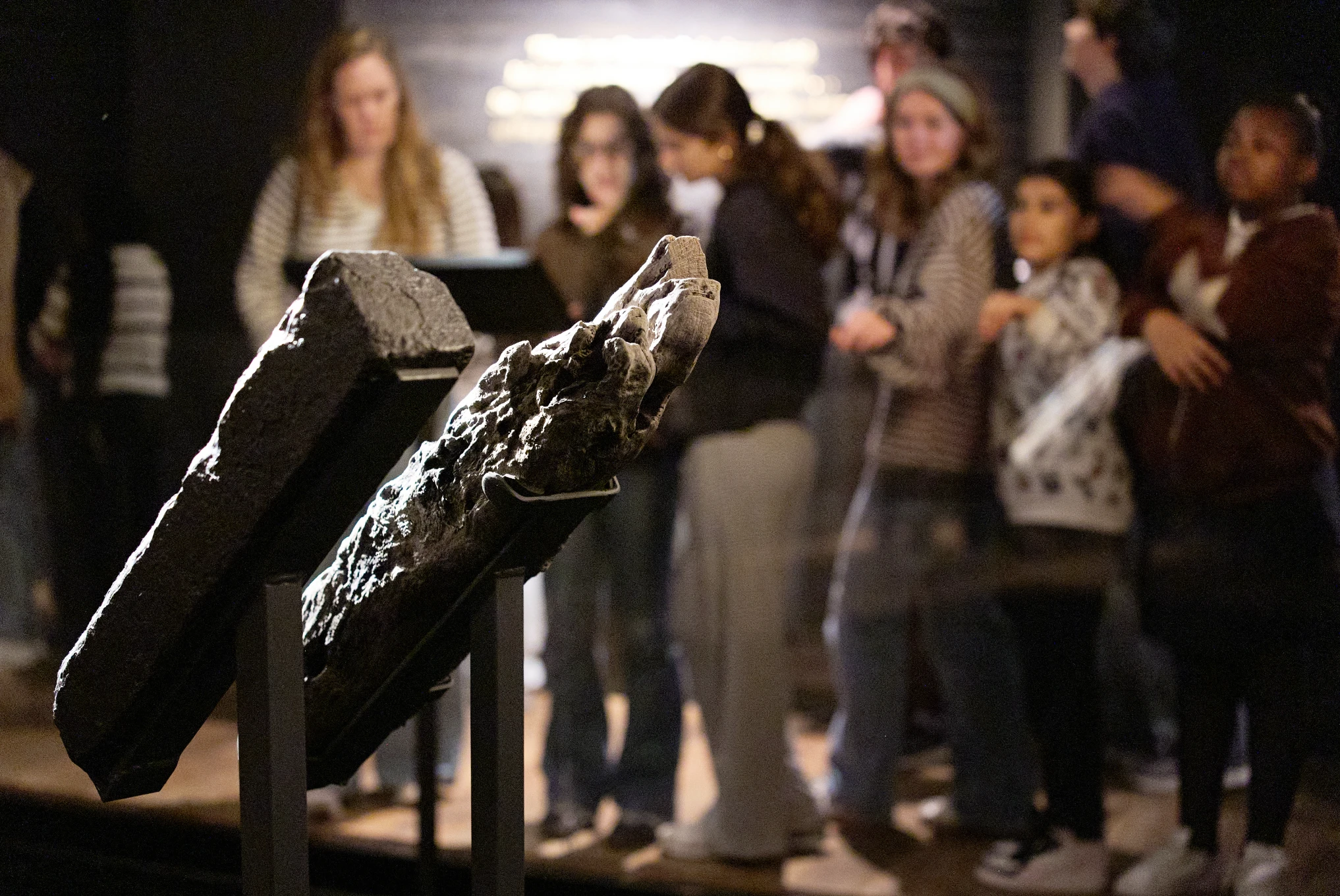
Since the museum's opening in 2016, the 33-pound (15-kilogram) timber work has been on display as part of a loan arrangement, appearing to be suspended over a dark vacuum with a ballast at its side. The Associated Press looked into the pact, which had a five-year initial term before being extended for a further five years in 2021 and concluding on July 1.
Later this year, a number of items, including the ship remains, will be returned to the Iziko Museums in South Africa. Its delicate nature necessitates the construction of a specific crate for its transportation.
The ship's other artifacts, such as the ballasts used as counterweights for the human cargo, are still on exhibit and will be sent back to South Africa in two years. The timber piece will be replaced by a manifest detailing the ship's cargo.
March 22 is the last day that visitors to the museum can view the timber work.
In December 1794, off the coast of Cape Town, South Africa, the São José, a Portuguese ship carrying almost 400 captives from Mozambique en route to Brazil, struck a rock and sank. Of those on board, half died. The Smithsonian claims that survivors were sold into slavery in the Western Cape.
The Slave Wrecks Project, a global network of organizations, found and examined the ship after it was recovered in 2015 and verified its connection to the transatlantic slave traffic. The ship is one of the first known pieces of wreckage of a ship carrying enslaved Africans.
Part of the wider "Slavery and Freedom" exhibit, which focuses on the slave trade, including the ships and conditions of transportation as well as items like shackles, the Á José piece is located on the museum's lowest public level.
The Middle Passage, a particularly dangerous section of the Atlantic Ocean voyage where many prisoners perished, is the subject of the exhibit. Paul Gardullo, assistant director of history at the National Museum of African American History and Culture, estimates that millions of individuals died throughout the trek, while an exact number is unknown.
in a time when any alterations pertaining to history and the American narrative in government parks, museums, or other public venues are being closely examined, the slavery exhibit has been altered. As the nation gets ready to commemorate the 250th anniversary of the signing of the Declaration of Independence, President Donald Trump's administration has concentrated on presenting the United States in a positive light.
The Republican president signed an executive order titled "Restoring Truth and Sanity to American History" in March 2025, which includes a study of the exhibits, displays, and programming of multiple Smithsonian museums. Among the organizations included in the decree is the National Museum of African American History and Culture.
The exhibit modification is solely due to the loan agreement, according to the museum's deputy director, Michelle Commander, who acknowledged that the timing might cause concerns.
Commander stated, "We're being transparent right now because we know there are those kinds of questions." "But, as we've stated, this is really about that item's conservation needs."
The South African government has a strong cultural patrimony law that governs how its artifacts and historical materials are handled and how long they may be leased out, according to Gardullo.
"The wooden materials require a little more careful attention because they are more delicate," he stated.
Unaware that it would soon be changed, recent visitors to the National Museum of African American History and Culture discussed the impact of the exhibit featuring the timber from slave ships.
There is a solemnity as visitors examine the dimly lit area where the timber rests close to a ship's ballast, and lines wait to enter the dimly lit corridor known as the Middle Passage. According to Krystina Hernandez, who was there escorting her 7-year-old son's classmates, the exhibit's physical quality brings it out of textbooks and into reality.
Northern Virginian Anehtra Reynolds was crying as she left the scene. She claimed that the display, along with the artifacts and the gallery's darkness, offered her a "piece of what they felt in terms of their misery."
Reynolds remarked, "I believe there was a sign in there that mentioned some slaves who starved themselves to death in hopes that when they died, they would be returned to their land."
Jim Carnes, who was in Washington visiting relatives from Birmingham, Alabama, claimed to be familiar with a lot of the material because he had worked in civil rights education in Montgomery and Birmingham, two locations that are crucial to the country's civil rights history.
"The artifacts are extraordinarily powerful," he said, adding that he is saddened and angry not just by the enslaved people's circumstances but also by the federal government's present efforts to "deny this ever happened."
Jorge Carvajal, who is originally from Colombia but now resides in south Florida with his wife, claimed that the exhibit dispelled prejudices, particularly the idea that Black people are irrationally furious.
I'm attempting to convey empathy. This will help folks empathize a lot more. "Well, you would hope," he remarked.
According to the commander, the museum's team will endeavor to ensure that the show has the same impact with the remaining objects and displays.
"This timber will be returned to its owners, so the story does not leave the museum," she stated.

Paul L. Mayer covers the intersection of politics, and financial policy, with a focus on how global and regional developments shape markets and everyday life.