Tuesday, June 2, 2026

Fact Guardian | Inside US Politics & World Affairs
Fact Guardian | Inside US Politics & World Affairs
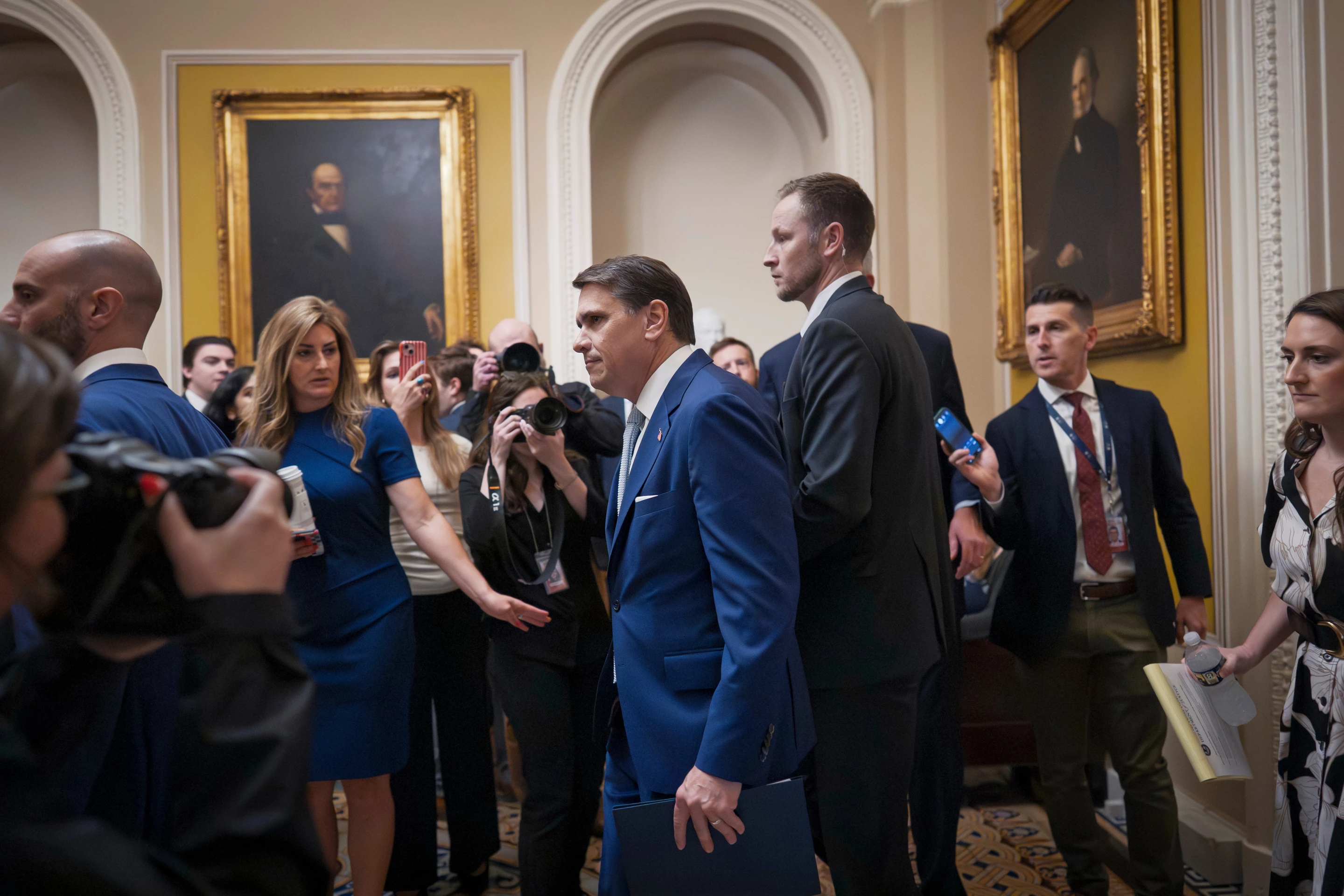
Acting Attorney General Todd Blanche arrives for a closed-door meeting with Republican senators who are expected to abandon a proposal for $1 billion in security money for the White House complex and President Donald Trump’s ballroom after it has failed to win enough party support, at the Capitol in Washington, Thursday, May 21, 2026.
WASHINGTON — And the day came when the Senate just said, No.
President Donald Trump’s political revenge tour may have met its match this week, as angry, upset Republican senators, pushed to a breaking point by his seemingly insatiable and outlandish demands — especially a $1.776 billion fund for Jan. 6 rioters and others he believes were wrongly prosecuted — did the unthinkable.
They just said no, shut up shop and went home.
It was a moment as unusual as it was bold, a startling flex from the Congress that has become a husk of its previous self as a coequal institution, the Republican majority almost always more inclined to accommodate the Republican president than fight him.
For now, it left in shambles the GOP’s primary aim of enacting an approximately $70 billion budget package that would fuel Trump’s immigration and deportation operations for the rest of his presidential term, through 2029. That vote, postponed until Congress returns next month, blows Trump’s June 1 goal to put it on his desk.
Trump shrugged during an event in the Oval Office when asked whether he was losing control of the Senate.
“I really don’t know,” remarked the president.
It all caps a bruising week after the president swept midterm primary elections, taking down one Republican after another — Sen. Bill Cassidy in Louisiana and Rep. Thomas Massie in Kentucky, and endorsing the challenger to Sen. John Cornyn in Texas — turning the might of his Make America Great Again movement against those who have stuck to their own views, rather than yield to his.
Not only the Senate. This year, enough GOP legislators in the Republican-led House broke ranks for the first time to show support for a war powers resolution from Democrats to stop Trump’s military action in Iran. House Speaker Mike Johnson put off the vote until he could provide a result that doesn’t face the president.
The endgame exposes Trump and his party in fresh ways.
The president is winning with his hand-picked candidates, but many are untested heading into general elections this fall. Trump’s approval rating is at a low and he’s squandering his political capital by alienating potential allies and threatening to lay out the G.O.P. agenda as they try to persuade voters to retain them in office.
Senate anger at Trump’s ‘payout for punks’ Trump’s announcement of an almost $1.8 billion “anti-weaponization” fund for those he believes were wrongly prosecuted came with little warning, and even less support, taking senators by surprise who were already furious about his push for $1 billion to provide security for his new White House ballroom.
The audacious nature of the agreement — Trump arranging a settlement to his own lawsuit against the Internal Revenue Service that would create the compensation fund for anyone believed to be wrongfully prosecuted — was too poisonous for the Senate to stomach.
“What circumstances would ever make sense to provide restitution for people who were either pled guilty or found guilty in a court of law?” steamed Sen. Thom Tillis, R-N.C. Tillis blasted the White House action as “stupid on stilts” and a “payout for punks.”
Former majority leader GOP Sen. Mitch McConnell of Kentucky, who prefers to go his own way, followed up with his own remark.
“So the top law enforcement officer in the country wants a slush fund to pay people who beat up cops? “Just dumb, morally wrong. Pick your poison,” McConnell added.
The political math was becoming clear: The more Trump bullies and badgers Congress, the more they are left wondering what they have to gain, or lose, from trying to placate him, especially for those already heading for the exits.
“I think it’s hard to separate anything that happens here from the political atmosphere that’s going on around us,” Senate Majority Leader John Thune, R-S.D., said.
Acting Attorney General Todd Blanche met with senators for hours behind closed doors to discuss the compensation fund but walked away empty-handed.
Afterward, Thune said the debate likely left the administration’s team “with an appreciation for the depth of feeling on the issue.”
Trump’s successes come at a price This week, Trump-backed candidates upset Republican incumbents in the House and Senate, demonstrating his command of the party loyal, but others in Congress saw the defeats of their colleagues in a different light.
You don’t want to have a minority party that’s completely devoted. And that’s maybe where we’re going,” said Republican Rep. Don Bacon of Nebraska, who is retiring at the end of his term.
It started Saturday when Cassidy, who voted to convict Trump in his Senate impeachment trial following January 6, lost his primary in Louisiana to a Trump-backed candidate. Days later, he returned to Washington noticeably more open to criticizing Trump – and more willing to vote against him.
“Congress has to hold the executive branch accountable,” Cassidy said Monday. A day later, he voted with Democrats to limit the war in Iran.
Then, Trump’s endorsement of Ken Paxton over Cornyn in Texas, a decision many Republicans considered both personal and politically risky. Trump said Cornyn “was not supportive of me when the going got tough.”
“Our conference has a lot of folks that are disappointed because we like working with John Cornyn,” said Sen. Mike Rounds, R-S.D.
Some feared the heated Texas race could risk a seat Republicans can't afford to lose.
“He made the wrong choice,” Tillis remarked. That’s going to cost a lot more to hold that seat.”
Frustration runs deep in the Senate There were signals too of Republican dissent in the House.
Rep. Brian Fitzpatrick, R-Pa., teamed with Democratic Rep. Tom Suozzi to introduce legislation to keep public money out of the planned “anti-weaponization” compensation fund for Trump.
But Fitzpatrick said the resistance within the party had been over policy, not politics.
“People in this country have the right to free speech,” Fitzpatrick added. But what we do here is all about policy.”
Republican Michigan Rep. Tom Barrett and Fitzpatrick were also anticipated to join Democrats in voting in favor of the war powers resolution to limit Trump’s military campaign in Iran.
GOP leaders withdrawn the legislation at the last minute when it became evident that Republicans did not have the numbers to defeat it.
“I think a lot of the Republican backlash to the war could be alleviated if Trump consulted Congress more,” said Bacon, who served around 30 years in the Air Force.
“You sit down with somebody and work with them instead of threatening and yelling and bullying,” Bacon said. "It doesn't work.

Paul L. Mayer covers the intersection of politics, and financial policy, with a focus on how global and regional developments shape markets and everyday life.