Thursday, April 16, 2026

Fact Guardian | Inside US Politics & World Affairs
Fact Guardian | Inside US Politics & World Affairs
Certain names will be familiar to the Supreme Court in the latest case involving a Black death row inmate from Mississippi, with arguments set for Tuesday.
WASHINGTON — The Supreme Court will hear arguments on Tuesday in a case involving a Black death row convict from Mississippi. Some of the names will be recognizable to the court.
Doug Evans, a former prosecutor who had a habit of kicking Black jurors off juries for unfair reasons, got rid of all but one Black individual from the panel that found Terry Pitchford guilty.
It was Judge Joseph Loper who let it happen. The conviction was upheld by the state Supreme Court.
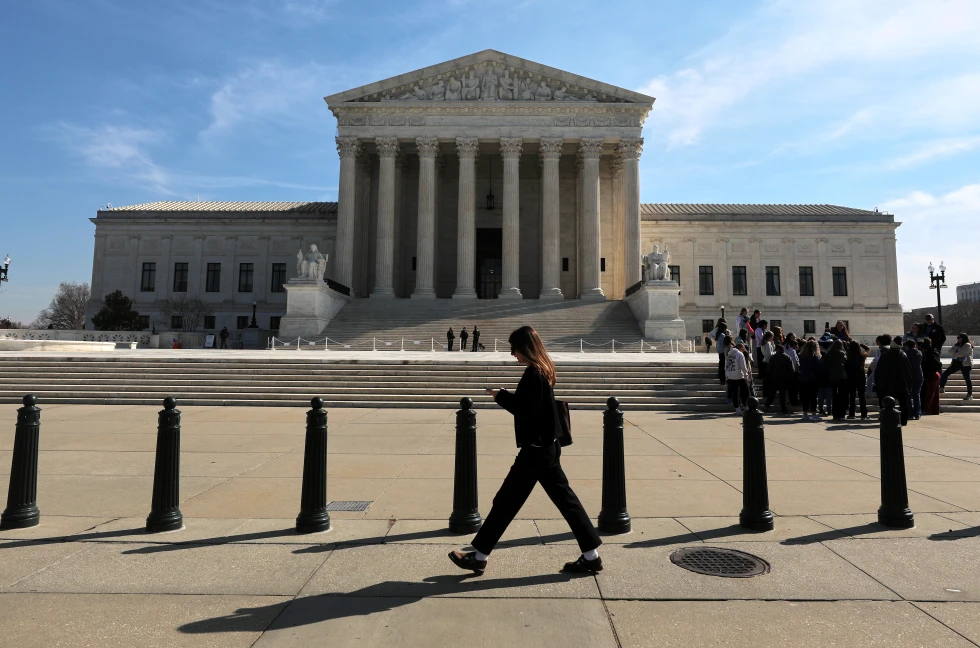
The Supreme Court overturned Curtis Flowers' death sentence and conviction just seven years ago. The same district attorney, trial judge, and state high court were involved. Justice Brett Kavanaugh called it a "relentless, determined effort to rid the jury of Black individuals."
Seven of the nine current justices were on the court at that time.
The Supreme Court has not been very sympathetic to defendants' claims in capital cases in recent years, especially when they try to avoid execution at the last minute. Last week, the court struck down Texas death row inmate Rodney Reed's appeal, even though three liberal justices disagreed and said he should be permitted to test evidence that he says will clear him.
But in December, the court decided to hear Pitchford's appeal on a claim of racial discrimination that has earned support even among some conservative justices in prior instances.
Pitchford was given the death penalty for killing Reuben Britt, the proprietor of the Crossroads Grocery, in 2004. The store located just outside Grenada in northern Mississippi. Pitchford, who is now 40, was 18 when he and a friend went to the store to steal something. The friend shot Britt three times, killing him, but he couldn't get the death punishment because he was under 18. Pitchford was found guilty of murder and given the death penalty.
For 20 years, the case has been going through the courts. In 2023, U.S. District Judge Michael P. Mills reversed Pitchford's conviction because he thought the trial judge didn't allow Pitchford's lawyers enough time to explain that the prosecution was wrong to reject Black jurors.
Mills said that Evans's behavior in earlier cases played a role in his decision. The 5th U.S. Circuit Court of Appeals, which is made up of five judges, all agreed to overturn the decision.
During jury selection, lawyers can get rid of a juror just because they think that individual could vote against their client.
In Batson v. Kentucky in 1986, the Supreme Court aimed to stop prejudice in the way juries were made up. The court subsequently said that jurors could not be excused from service because of their race. It also set up a way for trial judges to look at claims of discrimination and race-neutral justifications given by prosecutors.
The prosecution let four of the five Black persons left on the jury pool go in Pitchford's case, but the defense lawyers didn't agree. Mills said that the judge, Loper, accepted all four reasons and didn't look into whether race was the reason.
The Supreme Court issue is about whether Pitchford's lawyers did enough to challenge Loper's decisions and whether the state Supreme Court was right to say they didn't.
Joseph Perkovich, who will argue Pitchford's case on Tuesday, claimed that the evidence in the case plainly supports his client. Perkovich noted in an email that Loper "did not understand that he had a constitutional duty to find out if the reasons the district attorney gave for striking the Black citizens were true and credible." "The judge didn't even try to do that important job, even though the defense tried."
Lynn Fitch, the Attorney General of Mississippi, wrote in a letter to the state that the state Supreme Court's judgment was correct and that Evans did not unfairly exclude Black persons from the jury.
If Pitchford wins at the Supreme Court, his lawyers said in written filings that he should be let go or retried. Mississippi said that the matter should go back to the state Supreme Court so that it can look at his claims that the jury strikes were unfair.
Flowers was put on trial six times for the shooting deaths of four individuals. He got out of prison in 2019, and the state dismissed the charges against him the next year after Evans gave the case to state officials. In 2023, Evans quit his employment.
Mills said that the Flowers case doesn't show anything on its own. But he noted that the Mississippi Supreme Court should have looked at that history when it was deciding Pitchford's appeal.
Mills stated, "The court just thinks that it should have been part of a 'totality of the circumstances' look at the issue."

Paul L. Mayer covers the intersection of politics, and financial policy, with a focus on how global and regional developments shape markets and everyday life.