Tuesday, February 24, 2026

Fact Guardian | Inside US Politics & World Affairs
Fact Guardian | Inside US Politics & World Affairs
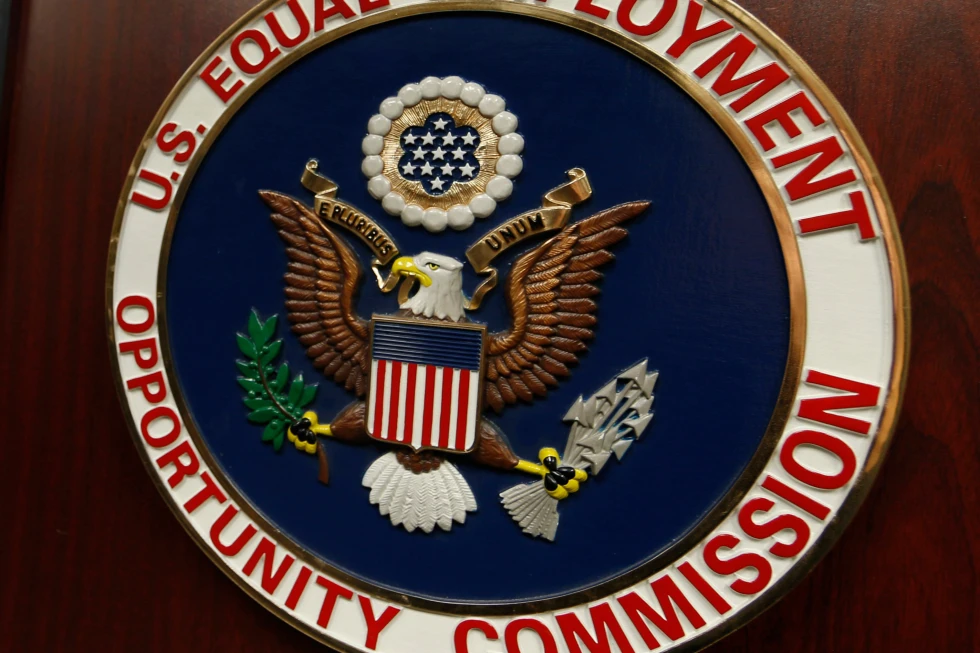
The emblem of the U.S. Equal Employment Opportunity Commission (EEOC) is displayed on a podium in Vail, Colo., Feb. 16, 2016.
A regional Coca-Cola bottler is being sued by the U.S. government agency that upholds workplace civil rights for alleged sex discrimination. The corporation is accused of discriminating against male employees by inviting only women to a networking event that the company sponsored.
On behalf of a male Coca-Cola Beverages Northeast employee who voiced concerns regarding a two-day networking trip for roughly 250 women to the Mohegan Sun casino resort in Connecticut in September 2024, the U.S. Equal Employment Opportunity Commission brought the lawsuit. The lawsuit claimed that by barring male employees from the event, the Bedford, New Hampshire-based business had violated Title VII of the Civil Rights Act of 1964.
The case, which was submitted to a district court in New Hampshire on Tuesday, challenges the kind of diversity programming that the EEOC has been focusing on since President Donald Trump reorganized the agency, which was established by Congress under the Civil Rights Act. It happens barely two weeks after the EEOC said that it is looking into allegations of discrimination against white employees in Nike's diversity initiatives.
In a statement announcing the case against Coca-Cola Northeast on Wednesday, acting EEOC general counsel Catherine L. Eschbach stated that "the EEOC will act to remedy through litigation when necessary" since "excluding men from an employer-sponsored event is a Title VII violation."
After failing to come to a conciliation agreement with Coca-Cola Beverage Northeast, an independent Coca-Cola bottler that services upstate New York and New England, the EEOC filed the complaint, according to court filings.
However, Coca-Cola Northeast stated in a statement to The Associated Press that it "finds it disappointing that the EEOC did not conduct a full investigation and we look forward to having our day in open court when we can tell the full story and expect to be vindicated."
Regarding the lawsuit's specifics, the business chose not to comment.
Coca-Cola Northeast celebrated what it dubbed its “first in-person Women’s Forum” in a LinkedIn post, calling it a “networking reception and event” that was attended by 250 female workers. According to the article, speakers discussed a variety of subjects, including juggling work and personal obligations and navigating a male-dominated business.
The EEOC referred the public to its fact sheet on DEI-related discrimination in its news release, which criticizes procedures like fellowship programs, employee assistance groups, and training. Although it doesn't go so far as to declare any one behavior unlawful, it cautions that depending on how it is formulated, it may turn into discrimination.
Trump appointee Andrea Lucas, the chair of the EEOC, has long been a strong opponent of many corporate DEI practices. Lucas made a social media appeal in December for white men who have encountered workplace prejudice to come forward.
Her tactics have drawn criticism from civil rights advocates and previous Democratic EEOC commissioners, who claim she is jeopardizing established procedures that have been supported by courts and are meant to stop discrimination and remove systemic barriers for minorities and women.
According to David Glasgow, co-founder of the Meltzer Center for Diversity, Inclusion, and Belonging at NYU School of Law, which monitors anti-DEI litigation, targeted programs, like networking events, for specific demographic groups have been among the most susceptible to lawsuits contesting diversity practices.
Glasgow, co-author of the book "How Equality Wins," which attempts to offer a guide on how organizations can deal with the backlash against DEI policies, said, "We urge organizations to shift 'from cohorts to content,' meaning that instead of limiting participation based on cohort, they could open it up to anyone who is committed to the content of the program."
Glasgow stated that after the defending party makes the program available to everyone, the majority of lawsuits against "targeted programs" have been resolved.
In an email to AP, Glasgow said, "It's a little strange that the current EEOC believes that targeting local businesses for holding a two-day women's retreat is a good use of limited resources at a time when there is still extensive discrimination against women in the workplace."
Requests for additional comments on the lawsuit were not answered by the EEOC.
Daphne W. Cooper focuses on Entertainment trends, analyzing how business, sports, and market developments affect regional and global economies.