Tuesday, June 2, 2026

Fact Guardian | Inside US Politics & World Affairs
Fact Guardian | Inside US Politics & World Affairs
South Korean retail tycoon Chung Yong-jin on Tuesday issued his second apology in two weeks as Starbucks’ local operation faces a backlash over a recent marketing campaign that was widely perceived as mocking victims of a bloody military crackdown on pro-democracy protesters in 1980.
SEOUL, South Korea — South Korean retail mogul Chung Yong-jin made his second apology in two weeks Tuesday as Starbucks’ local operation is facing a backlash over a recent marketing campaign widely seen as insulting victims of a deadly military crackdown on pro-democracy protestors in 1980.
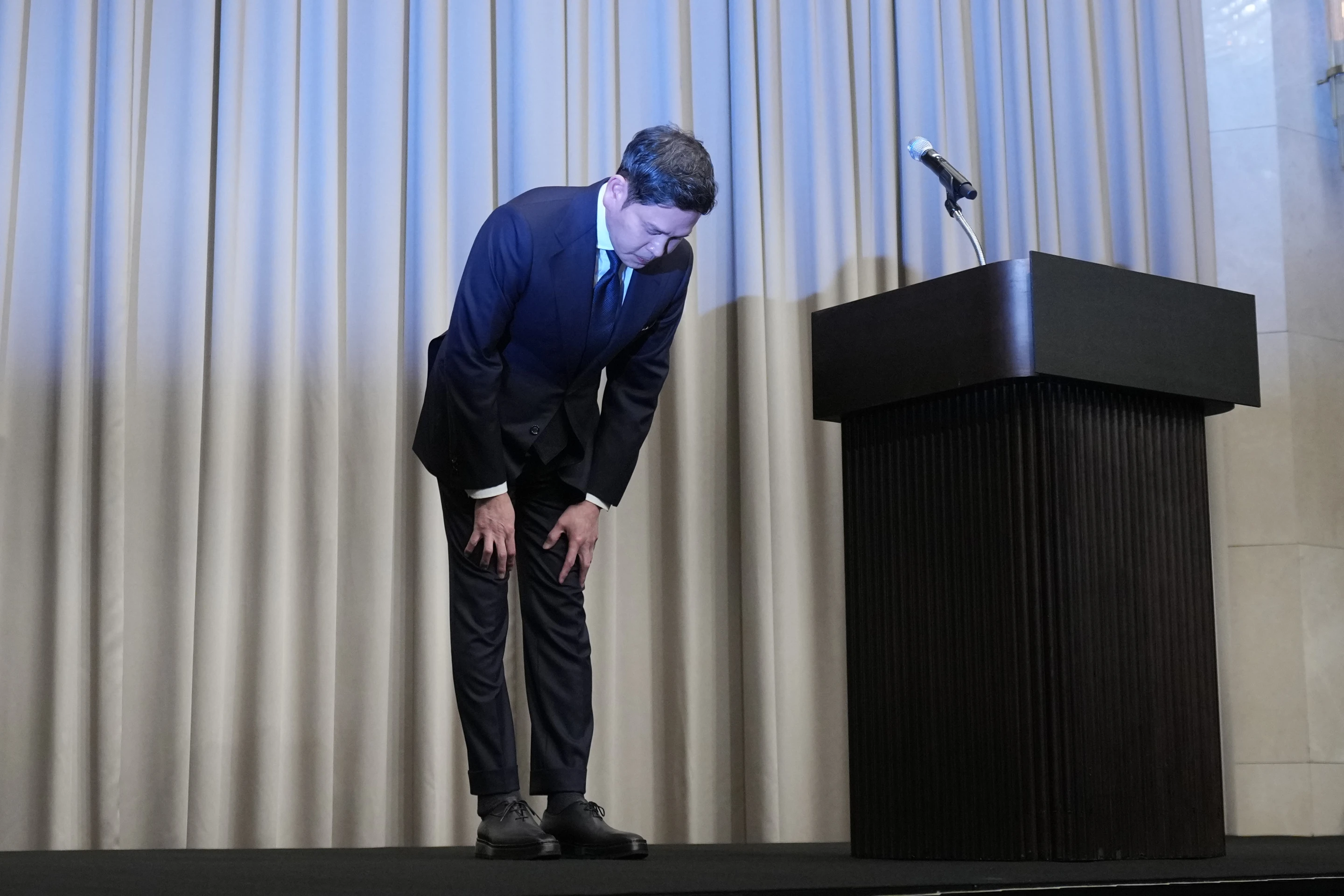
Chung, chairman of Shinsegae Group, which holds a 67.5 percent share in Starbucks Korea, bowed three times in a broadcast message, apologizing to the relatives of democratic campaigners killed by the country’s past military dictatorship and to the public in general.
The coffee shop ignited popular fury when it tried to sell a huge size of tumbler it dubbed a “tank” by announcing May 18 to be “Tank Day.” It is the anniversary of a democratic uprising in the southern city of Gwangju that was ruthlessly subdued by troops, tanks and helicopters, killing or injuring hundreds.
The campaign added fuel to the fire by employing the tagline “Thwack it on the table!,” which many took to be an allusion to a controversial police statement in 1987 that tried to cover up the torture murder of student activist Park Jong-chol. Police said Park was in a "sudden death" when detectives "hit the desk with a thwack."
The promotion triggered immediate criticism, and Shinsegae scrapped it within hours and removed the chief executive officer of Starbucks Korea. The police also began an investigation into the allegations of families of those killed in Gwangju.
“I take it very seriously that many people felt deep pain and anger as a result of Starbucks Korea’s inappropriate marketing campaign,” Chung said Tuesday.
He also called on customers not to “take it out on the folks working at Starbucks,” adding that the responsibility lies with management. No big incidents were immediately reported at retailers.
Chung’s initial apology came on May 19, when he said in a statement that the campaign caused “deep pain to the victims and bereaved families of the May 18 Democratization Movement as well as to the public.”
Jeon Sangjin, a senior Shinsegae Group executive, claimed the firm has not yet found conclusive evidence that Starbucks Korea marketing personnel intended to mock the pro-democracy movement, an accusation the employees have denied.
But he said several workers had declined management requests to surrender their devices during a weeklong internal review. Jeon said the company will go into the results of the police investigation and dismiss any employee found to have intended to mock demonstrators.
The campaign has prompted public calls for boycotts, echoed by government officials including Interior and Safety Minister Yoon Ho-jung, who stated no more Starbucks products will be utilized at government events and bemoaned the chain’s “anti-historical behavior.”
President Lee Jae Myung said on X last week the campaign showed “inhumane and disgraceful behavior by cheap profiteers who deny the values of the South Korean community, basic human rights and democracy.”
The persecution in Gwangju occurred months after General Chun Doo-hwan came to power in a coup in late 1979. Official statistics claim roughly 200 failed to survive in Gwangju, but campaigners said the real toll was significantly higher. Chun’s regime also imprisoned tens of thousands, claiming it was ridding the country of social problems
In 1987, public outrage against Chun's authoritarian rule led to a wave of nationwide protests, which compelled him to agree to a constitutional amendment that allowed direct presidential elections, largely viewed as the start of South Korea's transition to democracy.

Daphne W. Cooper focuses on Entertainment trends, analyzing how business, sports, and market developments affect regional and global economies.